Hello, I'm Maneshwar.
I'm building git-lrc, a Micro AI code reviewer that runs on every commit.
It is free and source-available on Github.
Star git-lrc to help devs discover the project.
Do give it a try and share your feedback.
A few years ago the AI conversation looked like this. "Should I pay $20?" "No, $200." "Actually this new tool is $39/month." My wallet started looking like it had gone through a startup funding winter.
Then Google quietly walked into the room and started dropping free AI tools like Oprah handing out cars. "You get an AI IDE!" "You get a workflow builder!" "You get a GitHub coding agent!" ...except nobody really noticed because Google announced them across five different events, Labs pages, GitHub repos, and random blog posts.
So I spent some time collecting the ones developers will actually find useful.
No "AI that writes your wedding speech." No "AI that guesses your spirit animal." Just tools that can actually help you ship software.
Bookmark this one.
1.
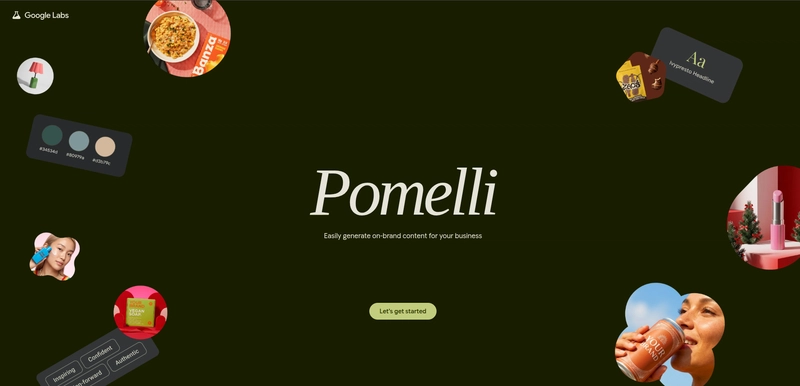
Pomelli https://labs.google/pomelli If you've ever launched a side project, you already know the painful truth.
Building the product is fun.
Writing 37 LinkedIn posts explaining the product... not so much.
Pomelli takes your website, understands what your product does, builds a brand profile, then generates social posts around it.
Think of it as hiring an intern that actually reads your landing page before tweeting.
Would I let it post automatically?
No.
Would I happily let it generate the first draft so I don't stare at a blinking cursor?
Absolutely.
Perfect for: Indie hackers SaaS founders Open-source maintainers pretending they enjoy marketing
2.
Stitch https://stitch.withgoogle.com Remember when designing an app meant opening Figma... ...moving a button 3 pixels... ...asking for feedback... ...moving it back 3 pixels?
Stitch skips a surprising amount of that.
You describe the interface.
Or upload a sketch.
Or even paste a wireframe.
It generates modern UI designs and can even produce frontend code.
It's not replacing designers.
It's replacing the blank canvas.
That's a huge difference.
3.
Antigravity https://antigravity.google/ Every AI company apparently wakes up and decides: "You know what?
Let's build another code editor." Google joined the party with Antigravity.
Prompt it.
Generate an app.
Modify code.
Refactor.
Debug.
Sound familiar?
Yes.
But competition here is fantastic.
Cursor, Claude Code, Windsurf and now Google all trying to out-build each other means developers keep winning.
I'm perfectly okay being the spoiled child in this particular custody battle.
4.
Mixboard https://labs.google/mixboard Imagine Canva and Pinterest had an AI-powered child.
That's Mixboard.
Instead of generating one image... ...you generate multiple concepts.
Mix.
Match.
Replace.
Rearrange.
Build moodboards.
For landing pages, presentations, branding, thumbnails, or app inspiration, it's surprisingly useful.
5.
Disco https://labs.google/disco This one's still on the waitlist.
The idea is interesting though.
Instead of opening 15 tabs and manually connecting information, Disco understands what's already in your browser and lets AI interact with everything together.
Think NotebookLM... ...except your browser becomes the notebook.
I'm curious to see where this one goes.
6.
NotebookLM https://notebooklm.google This one deserves way more attention.
Feed it: PDFs Docs YouTube videos Notes Research papers Then ask questions.
Generate summaries.
Create study guides.
Even generate podcast-style conversations.
I've thrown technical RFCs into NotebookLM before.
Reading 80 pages?
No thanks.
Asking "Explain this architecture like I'm joining the team tomorrow"?
Now we're talking.
7.
Learn Your Way https://learnyourway.withgoogle.com/ This feels like Google quietly built a personalized teacher.
Pick a topic.
It creates a learning path around you, not around a generic syllabus.
Want to learn Kubernetes?
It builds the course.
Rust?
Same.
Machine Learning?
Done.
It's surprisingly